Temperature split
18°F
Return air minus supply air. Under 14 and the system is not moving heat; over 22 and it is barely moving air.
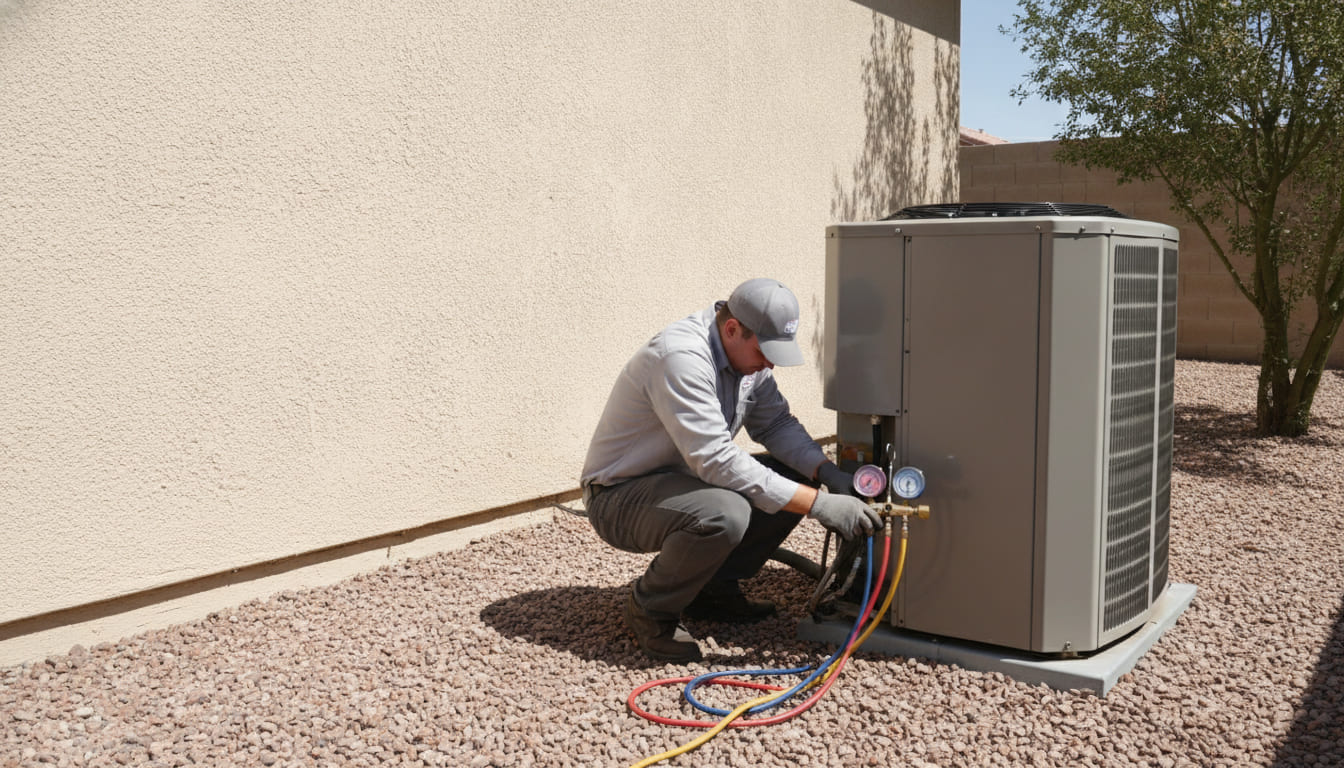
Today, 2:10 p.m. 118°F outside
Family-run in West Phoenix since 1998. A person picks up, we give you a time instead of a window, and the readings we took go on your invoice — whether you buy anything or not.
Average arrival June through September, counted from when you hang up.
Taken off the bill if you approve the repair the same day.
Split, static and amperage on the invoice, every visit.
Started out of a pickup in 1998. His daughter runs it now.
Every visit 4 readings
Anybody can tell you the compressor is bad. These four say whether that is true, and they take about twelve minutes. You get them written down whether we do the work or not.
18°F
Return air minus supply air. Under 14 and the system is not moving heat; over 22 and it is barely moving air.
0.72in wg
What the blower is fighting. High static is a duct problem wearing a compressor costume, and it is the reading nobody takes.
21.4A
Measured under load against the plate on the side of your unit. Climbing amps mean something upstream is making it work harder.
41.2µF of 45
The jolt that gets the compressor turning. It measures fine at 80° and gives up at 130°, which is why this is the most common call we take.
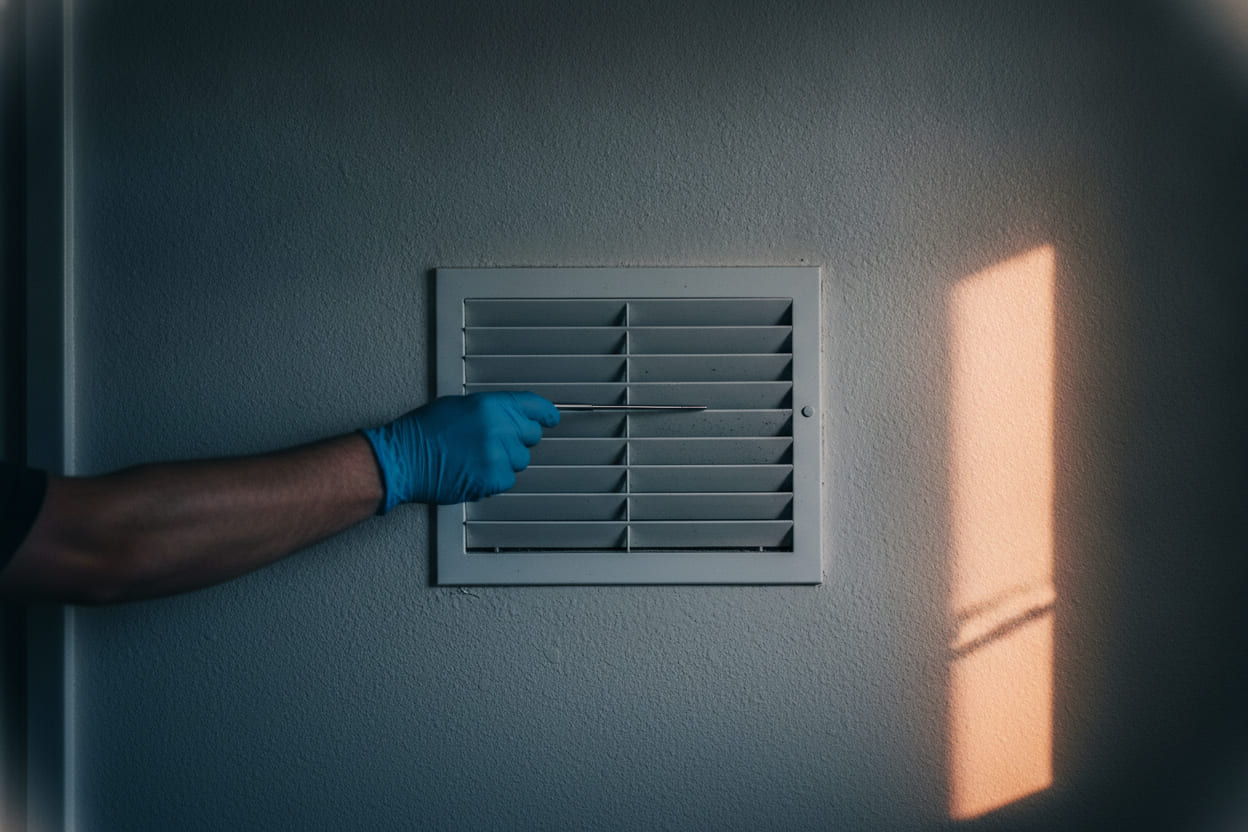
Why it matters 43° of difference
At 118° outside and 75° inside, everything in the machine runs closer to its limit than the people who designed it ever tested. Heat kills parts here, not age — a component that measures perfectly in a garage at 80° can be out of tolerance on your roof at 130°.
So we measure at the temperature the system actually runs at: in the afternoon, with the unit under load. A reading taken at nine in the morning tells you almost nothing about four in the afternoon.
Five calls 80% of our summer
Parts and labour, installed, in daylight hours. If yours is not on this list we will tell you the number before we start, and it will be the number on the invoice.
The jolt that gets the compressor turning. The most common call we take, and the cheapest one. We carry every value on the truck.
$210 – $340The switch that turns the outdoor unit on. The contacts pit, then they stick, and the unit runs when nobody asked it to. A twelve-dollar part with an expensive habit.
$180 – $290When it quits, head pressure climbs, the compressor pulls current it was never designed to pull, and the compressor is the next thing you buy.
$540 – $820When the line plugs, the water leaves some other way, and it usually chooses your ceiling. We clear it and we tell you what put it there.
$145 flatA duct pinched behind a joist. One room stays hot, everybody blames the machine, and the machine is fine. We find it with a static pressure reading, not a guess.
Quoted after we look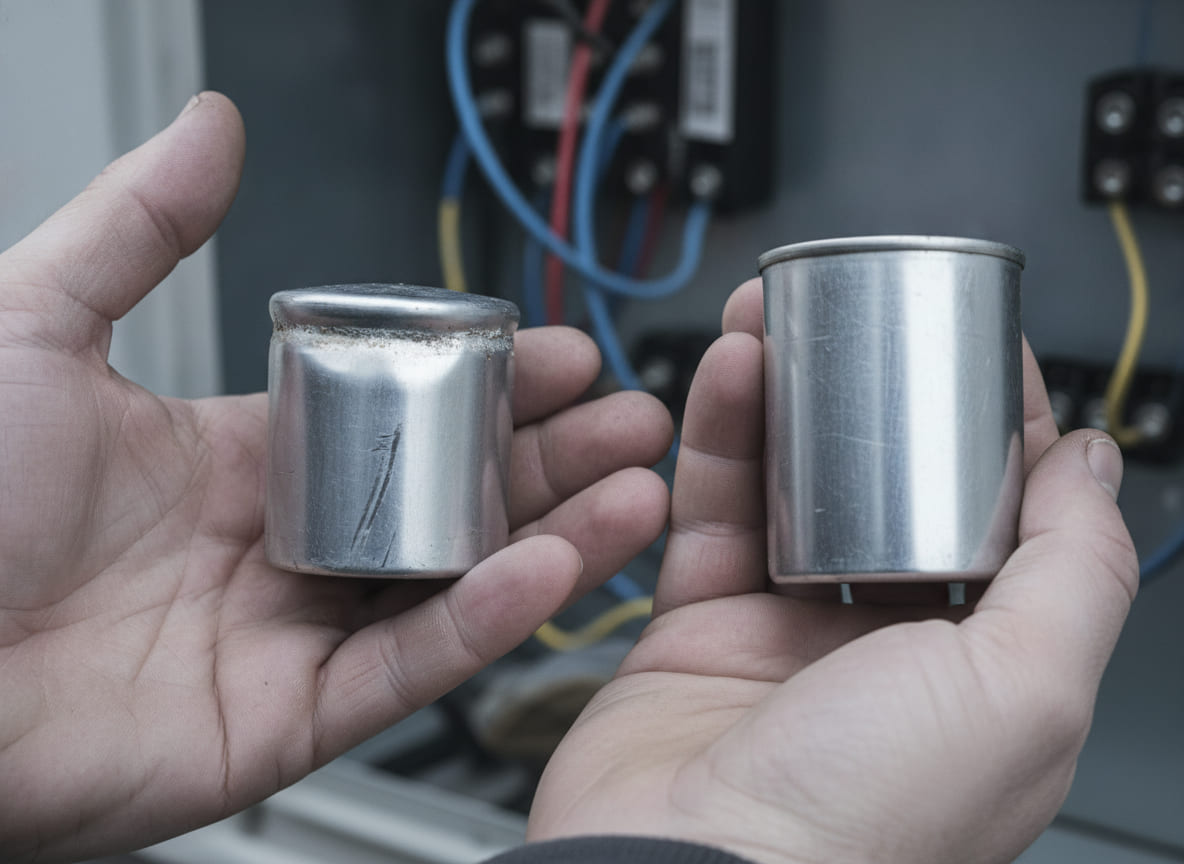
What we will not do
If a nine-year-old unit needs a $260 capacitor, that is the job. We will tell you plainly when a repair stops being worth it — usually a compressor on a system past twelve — and we will show you the readings that say so before you decide anything.
Three ways $18 a month is the cheapest
No memberships that expire and no tiers with names. Cancel the monthly one whenever you want; nothing you already paid for goes away.
One visit
$89
diagnostic
Something is wrong and you want it looked at today.
$149 between 5 p.m. and 7 a.m., June 1 – September 30
Seasonal tune-up
$119
per visit
Nothing is wrong yet and you would like it to stay that way.
Best booked in April, before the first 105° day
The Shade Plan
$18
a month
Two visits a year, and you go to the front of the line in July.
Cancel any month. The visits you already paid for stay yours.
June 1 – Sept 30 24 hours
From June through September somebody answers the telephone at any hour and a truck is staffed all night. The rest of the year we work 7 to 6, Monday to Saturday.
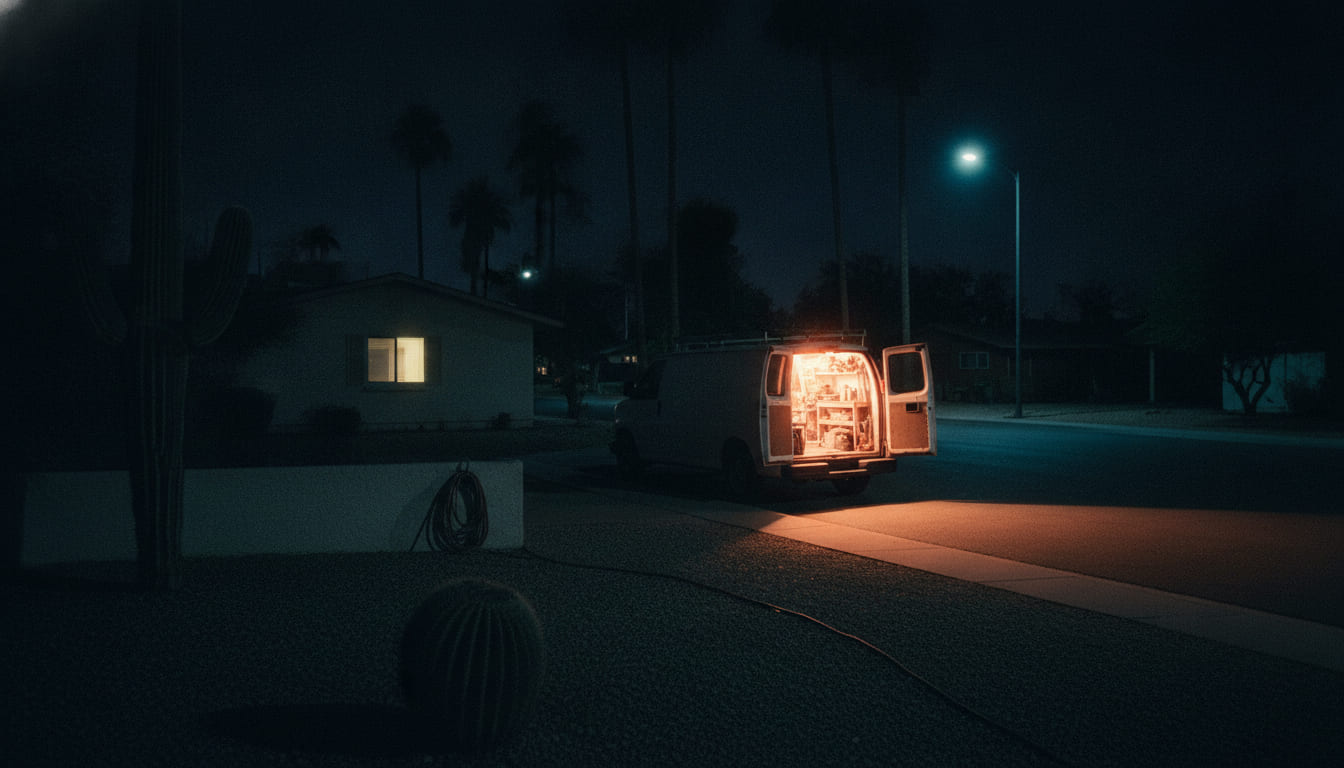
Nights and weekends $149 diagnostic
$149 between 5 p.m. and 7 a.m. in season, and the same flat repair prices as daylight. It costs more because a second person is awake, not because you are desperate.
If it can safely wait until seven in the morning we will say so on the telephone, and you will pay the daylight price. That call has cost us money and kept the customer.
Service area 22 minutes average
Glendale, Peoria, Avondale, Tolleson and everything inside the 101 on the west side. If you are in Mesa or Gilbert we will give you the name of somebody good out there rather than take three hours to arrive.
Tell us what it is doing
Call and a person picks up — not a menu, not a form that emails somebody in the morning. Say what you are hearing, or not feeling, and we will give you a time.