Green Room
(804) 555-0147
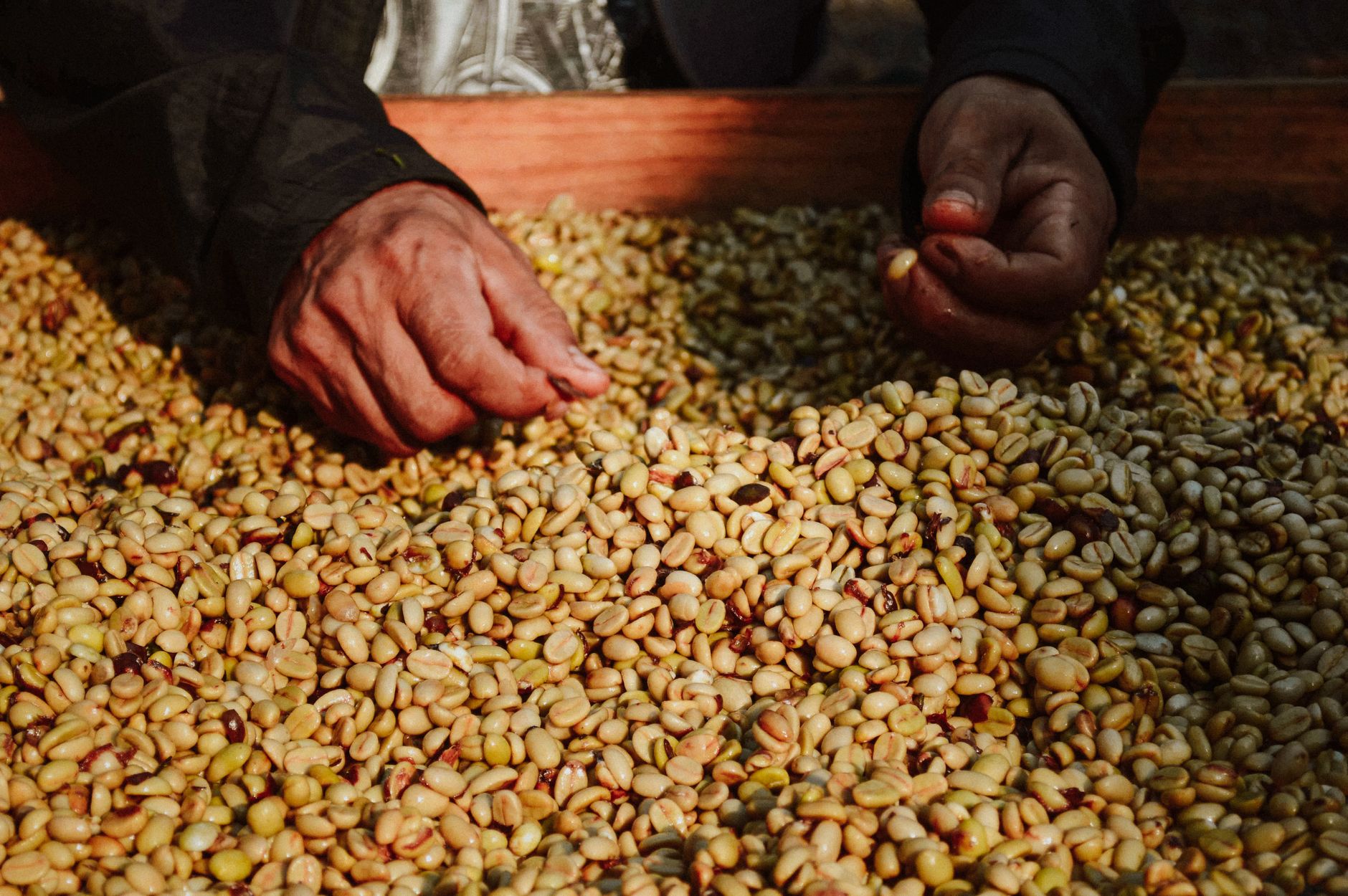
Two pairs of hands sorting coffee over a drying bed: pale parchment-coloured beans on the left, deep green unroasted beans on the right.

W Leigh Street · Scott’s Addition, Richmond Roasting since 2011

It arrives green. It leaves brown. Everything we do happens in between.

Four coffees at a time, ten pounds to a batch, on a drum roaster we run by ear and by thermocouple. The roast log for your bag is printed on the back of it, because you paid for the roast and not just for the bean.

Roast log · batch 4418

Kaffa, Ethiopia · 10 lb

Roast curve for batch 4418: bean temperature against time over eleven minutes. The line starts green at the charge, dips to the turning point at one minute twenty, climbs through first crack at eight minutes forty and is dropped at ten minutes fifty, ending brown. 430° 370° 310° 2:00 5:00 8:00 11:00 CHARGE FIRST CRACK 8:40 DROP 10:50

The dip at the start is the bean cooling the drum, not the drum failing. What happens after it — how fast the line rises and how long it stays flat — is the whole argument. Two roasters can hit the same colour on completely different paths, and the cup will tell you which one you are drinking.

Charge weight
10 lb
Turning point
1:20 · 188°F
First crack
8:40
Development
2:10 · 20 %
Drop temperature
418°F
Weight loss
14.6 %
Rested before shipping
3 days
01 — On the shelf this week

Four coffees, and we tell you when one is nearly gone.

We buy in small lots, so a coffee lasts as long as the lot lasts. Nothing here is a permanent blend pretending to taste the same in March and in October.

Kaffa, Ethiopia

Washed · heirloom · 1,950 m

Bergamot, white peach, black tea. The lightest thing we roast and the one most likely to change your mind about filter coffee.

$2112 oz · light
Huila, Colombia

Washed · caturra · 1,700 m

Red apple, cane sugar, milk chocolate. The one we hand people who say they do not like fruity coffee, and the one most of them come back for.

$1812 oz · medium

Leigh Street Espresso

Blend · Brazil & Colombia · rotates

Cocoa, toasted almond, dried fig. Built for milk and forgiving of a grinder that has drifted a click since Tuesday.

$1812 oz · med-dark

Nyeri, Kenya

Washed · SL28 · 1,800 m · 4 bags left

Blackcurrant, tomato leaf, grapefruit. Loud, and not for everybody. When the four bags are gone it will not come back until next season.

$2412 oz · light
02 — The whole business, in two photographs

Same bean. Eleven minutes apart.

A green coffee bean is grassy, dense and almost inedible. Everything you taste in the cup — every one of those notes on the bag — is built by heat, in a window about two minutes wide, and then it is gone and cannot be put back.
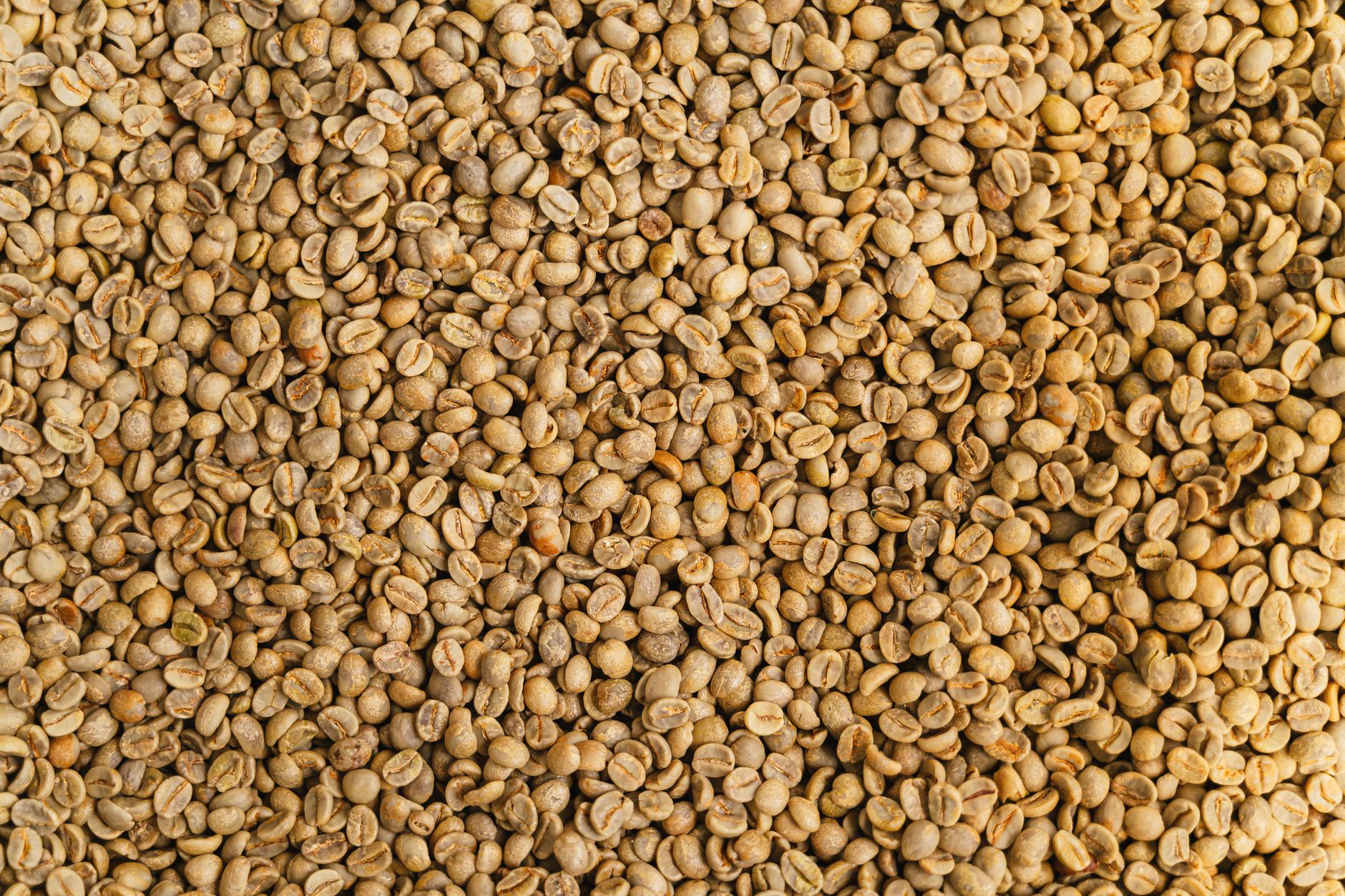
Unroasted coffee beans photographed from directly above, filling the frame, pale and matte with a faint green cast.
Before · 0:00Dense, grassy, and it will keep like this in a sealed sack for a year. This is what the green room is full of.
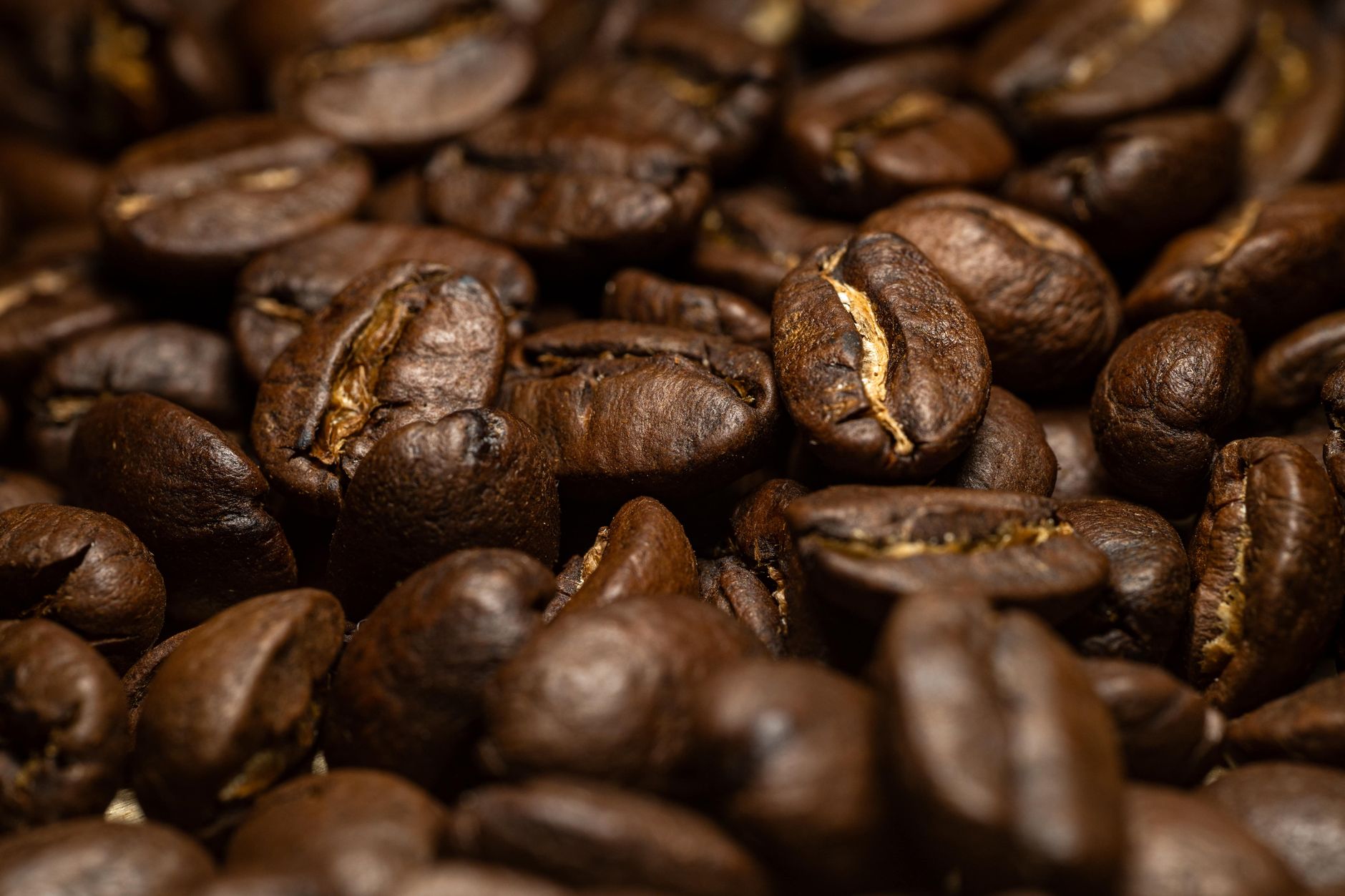
Roasted coffee beans in close-up, dark brown and glossy, with the centre cut showing pale along each bean.
After · 10:50Fourteen per cent lighter, twice the size, and now on a clock: best inside three weeks of the roast date stamped on the bag.

This is also why we will not sell you coffee without a roast date. A bag with only a “best before” twelve months out is telling you it does not want you to know when it was roasted.
03 — The roaster

A 1974 drum, rebuilt twice, and one person watching it.

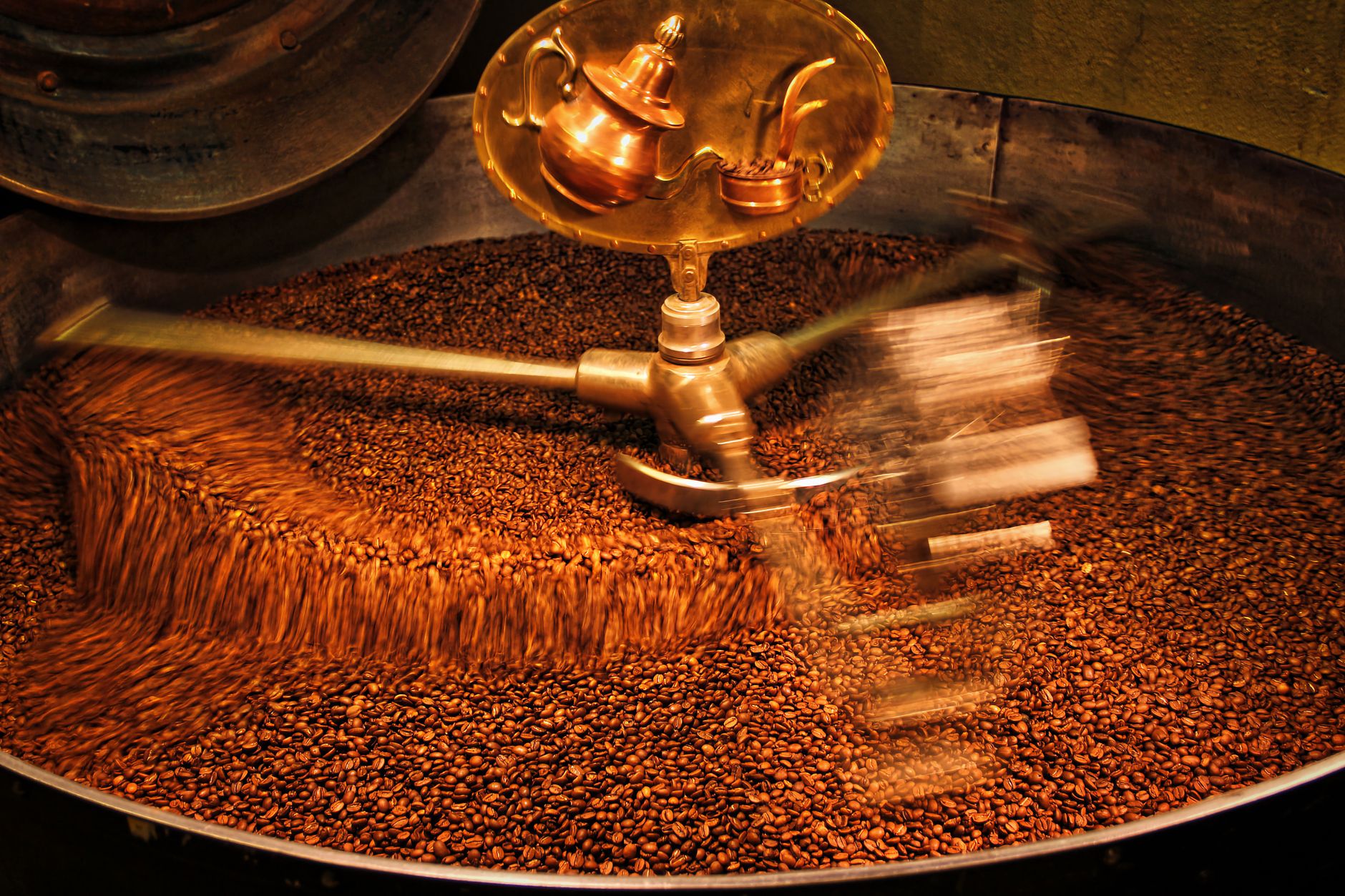
Coffee beans turning in the cooling tray of a drum roaster, the brass arm sweeping through them in a long blur.
10 lbper batch
  • Two thermocouples, not oneBean mass and exhaust, logged every second. One probe tells you the drum is hot; two tell you what the coffee is doing.
  • Gas and air by handNo profile playback. The same curve gets flown by a person every time, because the same beans behave differently in July than in February.
  • Ten pounds, four days a weekSmall enough that a bad batch costs us a morning, not a month — which is exactly why a bad batch never reaches a bag.
  • Cupped before it shipsEvery lot on a table, in the same water, against the last roast of the same coffee. If it moved, it does not go out.
04 — Wholesale

For cafés, restaurants and offices in Richmond.

We deliver Tuesday and Friday inside the city, roasted the day before. No minimum contract and no exclusivity clause — if you want to run somebody else’s single origin next to our espresso, that is a good sign for your customers.

5 lb bags

House & blends

$12.60

per pound

Leigh Street Espresso and the Colombia. The two that hold up all day on a busy bar.

5 lb bags · most cafés start here

Rotating single origin

$16.40

per pound

  • Tasting notes and a dial-in card with every lot
  • We come and dial your grinder on the first delivery
  • Two weeks’ notice before a lot runs out

Office · 2 lb bags

Ground to order

$14.80

per pound

Batch-brew grind, delivered whole or ground on the morning it goes out. Filters and a brew ratio card in the first box.

05 — Subscription

A bag turns up before the one you have runs out.

A cycle showing four steps two weeks apart: roast on Monday, rest for three days, ship on Thursday, and brew from Friday onwards. 14 DAYS ROAST MON REST 3D SHIP THU BREW FRI
  • Every two or four weeksOne bag or two, whole bean or ground for your brewer. Change it, pause it or stop it from the link in any email — no phone call.
  • $18 a bag, delivery included in RichmondAnywhere else in Virginia it is flat-rate post and it arrives in two days.
  • Roasted Monday, shipped ThursdayThree days of rest before it leaves, because coffee opened on day one tastes like the bag it came in.
  • Or collect itTwo dollars off if you pick it up at the roastery, and we will usually pull you a shot of whatever is on the bar.
06 — The bar, in the front of the roastery

Six things, done properly.

There is no syrup menu. If you want something we do not list, ask — we will make it if we can make it well.

Espresso

Doppio

$3.50 · Leigh Street, 18 g in, 38 g out.

Milk

Cortado

$4.25 · Four ounces, no art competition.

Milk

Latte

$5.25 · Whole, oat or none of the above.

Filter

Batch brew

$3.25 · Whatever we roasted on Monday.

Filter

Pour over

$6 · Four minutes. Worth the four minutes.

Cold

Cold brew

$4.75 · Sixteen hours, Colombia, no sugar.

  • Monday – Friday7:00 AM – 4:00 PM
  • Saturday8:00 AM – 3:00 PM
  • SundayClosed — we are asleep
  • Roasting daysMon, Tue, Thu, Fri
07 — Finding the door

Scott’s Addition, in the brick building with the loading bay.

The entrance is on the side, not on Leigh. If you can smell it, you have gone about thirty feet too far.

A simple street map of Scott's Addition showing West Leigh Street running east to west, Roseneath Road crossing it, the rail line to the north, and the roastery marked on the corner with its side entrance and free parking behind. RAIL LINE W LEIGH ST ROSENEATH RD N ARTHUR ASHE Green Room 3115 W LEIGH SIDE DOOR → FREE PARKING
  • 3115 W Leigh St, Richmond, VA 23230Side entrance on Roseneath. The roll-up door on Leigh is for green deliveries and it is usually shut.
  • Six free spaces behind the buildingAnd the whole block is unmetered after six, which is when the neighbourhood gets busy.
  • hello@greenroomrva.comWholesale enquiries get an answer the same day, usually with a sample bag in the post before we have talked about price.
  • (804) 555-0147Somebody picks it up between seven and four. If it rings out we are on the roaster and we will call you back within the hour.
08 — Questions we get at the counter

Asked often enough to write down.

Is dark roast stronger?

No, and it is the single most common thing we correct. A darker roast tastes heavier because more of the sugar has caramelised and some has burnt, but it holds slightly less caffeine by weight than a light roast of the same bean. Strength in the cup comes from your dose and your grind, not from the colour of the bean.

How long does a bag actually last?

Best from three days to three weeks after the roast date on the back. After that it does not go bad, it goes quiet: the aromatics leave first and you are left with body and bitterness. Keep the bag closed, at room temperature, away from the hob. Not the freezer, not the fridge, and not a glass jar on a sunny windowsill.

Do you grind it for me?

Gladly, and tell us the brewer — a moka pot and a French press want completely different grinds. But ground coffee stales in days rather than weeks, so if you drink it slowly, buy whole bean and a hand grinder. A twenty-dollar hand grinder improves your coffee more than a two-hundred-dollar machine.

Why is one bag $18 and another $24?

Because we paid very different prices for the green. The Kenya is a small lot bought at auction and it costs us nearly twice what the Colombia costs. We do not average the price across the shelf, because that quietly makes the cheap coffee subsidise the expensive one and hides which is which.

Can I watch a roast?

Yes. Mondays and Thursdays, first batch at 7:30 AM, and you should stand where we tell you to because the drum front gets to about four hundred degrees. It takes eleven minutes and you will hear first crack before you see it. No charge, no booking, just turn up.

Do you buy direct from farms?

Some of it, and we say which. The Ethiopia and the Kenya come through an importer we have used for nine years; the Colombia is from a producer we have bought from four seasons running. We will tell you what we paid per pound for the green if you ask — it is on the card next to the bag.